
The Fractured Self and the Work of Remembering
Crow GirlThis thread traces how buried trauma divides identity, turns memory into an unstable refuge, and eventually makes integration possible only through accepting ownership of the past.
increasing Bearing strength in each event
 decreasing
Bearing strength in each eventdecreasingA Mind Builds a Refuge
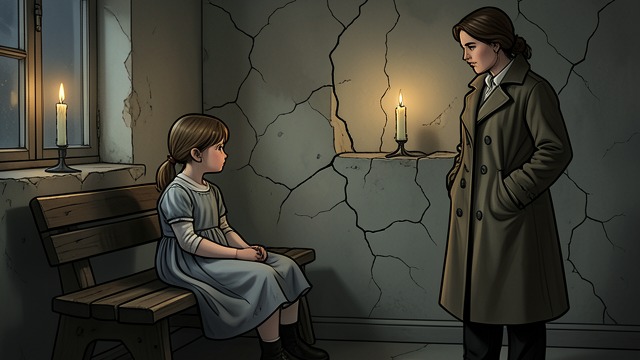
A Room Built to Survive
Trauma and division
Victoria Bergman’s childhood is organized around danger that she cannot escape. Her father’s abuse and her mother’s silence leave her with no reliable adult protection, so psychological distance becomes a form of shelter.
The child learns to experience unbearable events in fragments. Memories arrive as smells, images, bodily sensations, and disconnected stories rather than as a stable account of her life. What she cannot safely confront, she pushes beyond the boundaries of ordinary awareness.
The cost of refuge
That division helps Victoria endure, but it also keeps her from understanding how her past shapes her choices. She can appear composed while carrying terror, shame, and anger that have no shared narrative or place in which to settle.
The story presents fragmentation not as an exotic mystery but as an adaptation to conditions that should never have existed. The refuge protects the child, yet the walls that make survival possible will later obstruct intimacy, memory, and responsibility.
The Body Keeps the Story
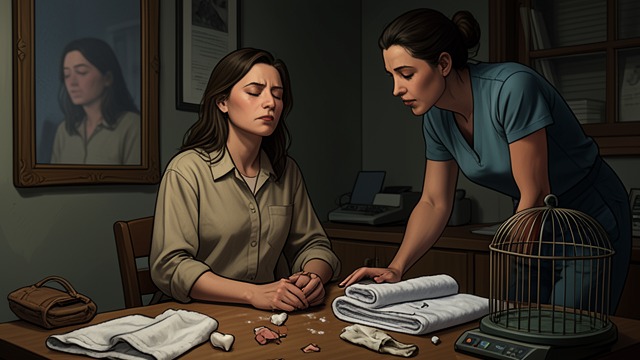
Memory in the Body
Associations instead of chronology
In therapy, Victoria’s monologues move rapidly between childhood incidents, later assaults, and images that seem unrelated. Food, bodily pain, birds, a sauna, and a broken tooth become routes into memories she cannot yet approach directly.
The fragmented form matters: Victoria does not offer a neat chronology because her experience has not become a coherent story inside her. Her body and sensory associations often register what her conscious account leaves out, giving the sessions the shape of an investigation into an unrecognized past.
A dangerous mirror
Sofia Zetterlund listens and records the sessions, trying to interpret their repeated images. Yet the slow, associative voice affects Sofia too; she falls asleep, dreams, and begins to blur her own reactions with the material she is hearing.
The therapeutic encounter therefore exposes a tension between empathy and distance. Listening can make forgotten experience speak, but when the listener loses her boundaries, another person’s memories may be mistaken for her own or become a means of avoiding her own history.
One Name for Two Lives
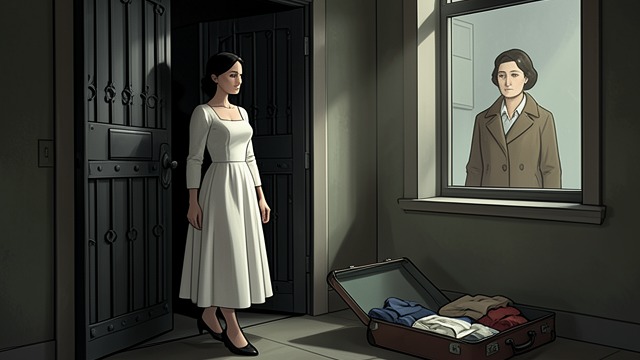
A Name as a New Life
The proposed escape
After medical examinations document extensive abuse, Victoria is given the possibility of a protected identity. The change is meant to separate her from the father who has controlled her life and give her a chance to build an independent future.
She chooses the name Sofia Zetterlund herself, borrowing it from the older therapist whose attention has made her feel seen. The act is both practical and intimate: Victoria wants to leave her old existence behind, but she chooses a new name through a relationship that offered trust.
Disappearance without integration
A legal identity can help someone escape immediate danger, but it cannot erase the memories, bodily responses, or internal divisions that made escape necessary. Victoria vanishes from ordinary records, while the wounded parts of her experience remain active beneath her new life.
The novel makes the name change double-edged. It gives Victoria distance and safety, yet the identity of Sofia becomes a structure built over an unprocessed past. The new self can function for years, but function is not the same as being whole.
The Past Breaks Through
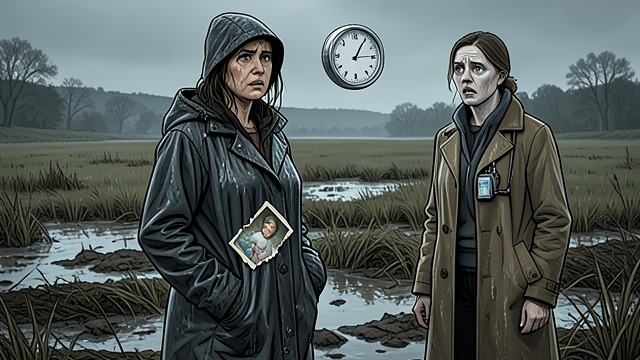
A Life with Missing Hours
The old pattern returns
When Johan disappears during the visit to Gröna Lund, Sofia experiences panic and loses time. Later she finds her clothes wet and muddy and a childhood Polaroid in her pocket, physical traces of events she cannot recall.
The crisis makes her recognize that memory gaps are no longer harmless absences. Victoria’s experiences and actions are pressing into Sofia’s present, while Sofia’s attempts to preserve routine and appear composed leave her with an incomplete account of what she has done.
Recognition without instant repair
Sofia gradually discovers that the divisions within her are not independent people but parts formed to survive different kinds of pain. Her archive, recordings, and notes offer clues, but the evidence cannot substitute for the difficult task of accepting that Victoria’s history belongs to her too.
This recognition is frightening because it removes the protection of distance. If Sofia can no longer blame an unknown other for her impulses, then healing requires more than uncovering memories: it requires acknowledging both victimization and the consequences of her own conduct.
Choosing to Share the Past
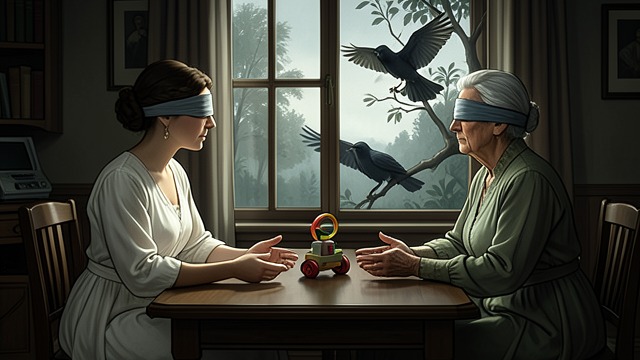
Toward a Shared Memory
Recognition through the old therapist
Victoria returns to the elderly Sofia Zetterlund, whose blindness has changed the familiar face but not the steadiness that once helped Victoria speak. Their meeting gives Victoria a rare chance to revisit the earlier therapeutic relationship with new knowledge of what became of her life.
She speaks about the child she gave up, the people she has hated, and the different inner figures that helped her survive. The conversation does not erase the violence or settle every question, but it allows her to describe experience rather than only enact or evade it.
Integration as an ongoing choice
By the end, Victoria is moving toward a less divided account of herself. The Reptile, Sleepwalker, and Crow Girl no longer need to be treated as strangers who can carry every unwanted feeling on her behalf; they can be understood as parts of one life.
That shift is not a cure that makes the past disappear. It is an ethical and emotional beginning: accepting the memories as hers, allowing contradictory feelings to coexist, and deciding that future actions belong to the same person who endured the earlier harm.
Childhood, before the family leaves Grisslinge
Early adulthood, during Victoria’s therapy at Sofia Zetterlund’s Clinic
After Victoria receives protected identity documents in 1988
Late summer, after Johan disappears at Gröna Lund
After Victoria and Sofia reunite at the Sunflower Nursing Home
